Tuesday, 13 March 2012

Health Benefits of Orange


Oranges' Healing Phytonutrients
In recent research studies, the healing properties of oranges have been associated with a wide variety of phytonutrient compounds. These phytonutrients include citrus flavanones(types of flavonoids that include the molecules hesperetin andnaringenin), anthocyanins, hydroxycinnamic acids, and a variety of polyphenols. When these phytonutrients are studied in combination with orangesâ€"vitamin C, the significant antioxidant properties of this fruit are understandable.
But it is yet another flavanone in oranges, the herperidinmolecule, which has been singled out in phytonutrient research on oranges. Arguably, the most important flavanone in oranges,herperidin has been shown to lower high blood pressure as well as cholesterol in animal studies, and to have strong anti-inflammatory properties. Importantly, most of this phytonutrient is found in the peel and inner white pulp of the orange, rather than in its liquid orange center, so this beneficial compound is too often removed by the processing of oranges into juice.

Monday, 12 March 2012

What's New and Beneficial About Grapes


  • Grapes have long been classified as a low glycemic index (GI) food, with GI values ranging between 43-53. But having a low GI value is not necessarily the same as having blood sugar benefits. In the case of grapes, recent studies have shown that the low GI value of grapes is also a good indicator of this fruit's blood sugar benefits. Better blood sugar balance, better insulin regulation, and increased insulin sensitivity have now been connected with intake of grape juices, grape extracts, and individual phytonutrients found in grapes.
  • Several grape phytonutrients are now believed to play a role in longevity. At the top of the list in this area of research is resveratrol (a stilbene phytonutrient present mostly in grape skins, but also in grape seeds and grape flesh). Resveratrol has recently been shown to increase expression of three genes all related to longevity. (These three genes are SirT1s, Fox0s, and PBEFs.) Interestingly, some researchers have shown a parallel between activation of these longevity genes by resveratrol and activation by calorie-restricted diets. In aging and longevity research, our ability to get optimal nutrition for the fewest possible amount of calories is related to our longevity, and the more we can decrease our calories while staying optimally nourished, the better our chances of healthy aging and longevity.
  • The 2011 edition of the Shopper's Guide to Pesticides by the Environmental Working Group has once again identified conventionally grown grapes as one of most problematic fruits and vegetables in terms of pesticide residues. There's new evidence that pesticide residues can be successfully avoided by purchase of certified organic grapes. In a recent study of 99 vineyards in the Aegean Sea area of the Mediterranean, pesticide residues were found on conventionally grown table grapes, but were determined to be undetectable on grapes that had been organically grown. This new evidence adds to our confidence about the added health benefits of selecting organically grown grapes.

Sunday, 11 March 2012

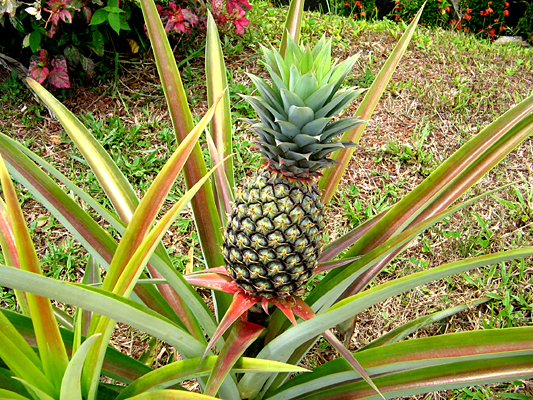
Health Benefits of Pineapple


Bromelain is a complex mixture of substances that can be extracted from the stem and core fruit of the pineapple. Among dozens of components known to exist in this crude extract, the best studied components are a group of protein-digesting enzymes (called cysteine proteinases). Originally, researchers believed that these enzymes provided the key health benefits found in bromelain, a popular dietary supplement containing these pineapple extracts. In addition, researchers believed that these benefits were primarily limited to help with digestion in the intestinal tract. However, further studies have shown that bromelain has a wide variety of health benefits, and that many of these benefits may not be related to the different enzymes found in this extract. Excessive inflammation, excessive coagulation of the blood, and certain types of tumor growth may all be reduced by therapeutic doses of bromelain when taken as a dietary supplement. Studies are not available, however, to show these same potential benefits in relationship to normal intake of pineapple within a normal meal plan.
Bromelain extracts can be obtained from both the fruit core and stems of pineapple. Potentially important chemical differences appear to exist between extracts obtained from the stem versus the core fruit. However, the practical relevance of these differences is not presently understood. Most of the laboratory research on bromelain has been conducted using stem-based extracts, however.
Although healthcare practitioners have reported improved digestion in their patients with an increase in pineapple as their "fruit of choice" within a meal plan, we haven't seen published studies that document specific changes in digestion following consumption of the fruit (versus supplementation with the purified extract. However, we suspect that the core fruit will eventually turn out to show some unique health-supportive properties, including possible digestion-related and anti-inflammatory benefits.

Saturday, 10 March 2012

Health Benefit Of Strawberry


What's New and Beneficial About Strawberries
  • Many foods commonly consumed in the U.S. are valuable sources of antioxidants. But researchers have recently ranked the 50 best antioxidant sources among commonly eaten foods and found strawberries to be quite exceptional. When total antioxidant capacity was measured against a uniform amount of food (100 grams, or about 3.5 ounces), strawberries ranked 27th best among U.S. foods. In addition, when only fruits were considered, strawberries came out 4th among all fruits (behind blackberries, cranberries, and raspberries). However, since many foods (for example, spices and seasonings) are seldom consumed in amounts as large as 3.5 ounces, researchers also looked at common serving sizes for all foods and their total antioxidant capacity. In this evaluation based on common serving sizes, strawberries came out 3rd among all U.S. foods including spices, seasonings, fruits, and vegetables! (In this analysis based on serving size, only blackberries and walnuts scored higher in total antioxidant capacity.) When we hear the word "strawberry," we might think about a very commonplace fruit. But the antioxidant capacity of strawberry is anything but common!
  • Recent research has shown strawberries to be a surprisingly fragile, perishable, and delicate fruit. Food scientists recently took a close look at storage time, storage temperature, storage humidity, and degree of strawberry ripeness and found significant differences between different types of strawberry storage. On average, studies show 2 days as the maximal time for strawberry storage without major loss of vitamin C and polyphenol antioxidants. It's not that strawberries become dangerous to eat or invaluable after 2 days. It's just that more storage time brings along with it substantially more nutrient loss. In terms of humidity, 90-95% has been shown optimal. Most refrigerators will average a much lower humidity (between 80-90%). Because air circulation inside the fridge can lower humidity, you may want to give your strawberries more storage humidity by putting them in your refrigerator's cold storage bins (if available). Those cold storage bins will help boost humidity by reducing air circulation. If your fridge does not have storage bins, you can use a sealed container for refrigerator storage of your strawberries. Optimal temperature for strawberry storage over a 2-day period has been found to be relatively cold--36F (2C). All public health organizations recommend refrigerator temperatures of 40F (4.4C) as the maximum safe level for food storage. However, if you are storing sizable amounts of fruits and vegetables--including strawberries--in your refrigerator, you may want to consider setting your refrigerator to a lower-than-maximum temperature setting in the range of 36-38F (2-3C). In terms of ripeness, recent studies have found that both underripeness and overripeness can have an unexpectedly large impact on the phytonutrient content of strawberries, especially their antioxidant polyphenols. Fortunately, optimal strawberry ripeness can be judged by color. You'll want to consume your strawberries when their amazing pinkish-red color is most vibrant and rich in luster.

Friday, 9 March 2012

Health Benefits Of Banana


Creamy, rich, and sweet, bananas are a favorite food for everyone from infants to elders. Sports enthusiasts appreciate the potassium-power delivered by this high energy fruit.
Cardiovascular Protection from Potassium and Fiber
Bananas are one of our best sources of potassium, an essential mineral for maintaining normal blood pressure and heart function. Since the average banana contains a whopping 467 mg of potassium and only 1 mg of sodium, a banana a day may help to prevent high blood pressure and protect against atherosclerosis.
The effectiveness of potassium-rich foods such as bananas in lowering blood pressure has been demonstrated by a number of studies. For example, researchers tracked over 40,000 American male health professionals over four years to determine the effects of diet on blood pressure. Men who ate diets higher in potassium-rich foods, as well as foods high in magnesium and cereal fiber, had a substantially reduced risk of stroke.
A study published in the Archives of Internal Medicine also confirms that eating high fiber foods, such as bananas, helps prevent heart disease. Almost 10,000 American adults participated in this study and were followed for 19 years. People eating the most fiber, 21 grams per day, had 12% less coronary heart disease (CHD) and 11% less cardiovascular disease (CVD) compared to those eating the least, 5 grams daily. Those eating the most water-soluble dietary fiber fared even better with a 15% reduction in risk of CHD and a 10% risk reduction in CVD.
In addition to these cardiovascular benefits, the potassium found in bananas may also help to promote bone health. Potassium may counteract the increased urinary calcium loss caused by the high-salt diets typical of most Americans, thus helping to prevent bones from thinning out at a fast rate.
Soothing Protection from Ulcers
Bananas have long been recognized for their antacid effects that protect against stomach ulcers and ulcer damage. In one study, a simple mixture of banana and milk significantly suppressed acid secretion. In an animal study, researchers found that fresh bananas protected the animals' stomachs from wounds.
Bananas work their protective magic in two ways: First, substances in bananas help activate the cells that compose the stomach lining, so they produce a thicker protective mucus barrier against stomach acids. Second, other compounds in bananas called protease inhibitors help eliminate bacteria in the stomach that have been pinpointed as a primary cause of stomach ulcers.

Thursday, 8 March 2012

Health Benefit Of Lemon/Limes


Phytonutrients with Antioxidant and Antibiotic EffectsLike many of the fruits and vegetables featured on our website, lemons and limes contain unique flavonoid compounds that have antioxidant and anti-cancer properties. Of special interest in limes have been flavonoids called flavonol glycosides, including many kaempferol-related molecules. While these flavonoids have been shown to stop cell division in many cancer cell lines, they are perhaps most interesting for their antibiotic effects. In several villages in West Africa where cholera epidemics had occurred, the inclusion of lime juice during the main meal of the day was determined to have been protective against the contraction of cholera. (Cholera is a disease triggered by activity of the bacteria called Vibrio cholera). Researchers quickly began to experiment with the addition of lime juice to the sauce eaten with rice, and in this role, lime juice was also found to have a strong protective effect against cholera.Several other fascinating research studies on the healing properties of lemons and limes have shown that cell cycles—including the decision a cell makes about whether to divide (called mitosis) or die (apoptosis—are altered by lime juice, as are the activities of special immune cells called monocytes.In addition to their unique phytonutrient properties, lemons and limes are an excellent source of vitamin C, one of the most important antioxidants in nature. Vitamin C is one of the main antioxidants found in food and the primary water-soluble antioxidant in the body. Vitamin C travels through the body neutralizing any free radicals with which it comes into contact in the aqueous environments in the body both inside and outside cells. Free radicals can interact with the healthy cells of the body, damaging them and their membranes, and also cause a lot of inflammation, or painful swelling, in the body. This is one of the reasons that vitamin C has been shown to be helpful for reducing some of the symptoms of osteoarthritis and rheumatoid arthritis.Since free radicals can damage blood vessels and can change cholesterol to make it more likely to build up in artery walls, vitamin C can be helpful for preventing the development and progression of atherosclerosis and diabetic heart disease.Vitamin C is also vital to the function of a strong immune system. The immune system's main goal is to protect you from illness, so a little extra vitamin C may be useful in conditions like colds, flus, and recurrent ear infections.Owing to the multitude of vitamin C's health benefits, it is not surprising that research has shown that consumption of vegetables and fruits high in this nutrient is associated with a reduced risk of death from all causes including heart disease, stroke and cancer.

Wednesday, 7 March 2012

Health Benefit Of Cranberry


What's New and Beneficial About Cranberries
  • For many years, researchers believed that the ability of cranberries and cranberry juice to help prevent urinary tract infections (UTIs) was partly related to the strong acidity of the cranberries. Recent research has shown that it's not the acidity of the cranberries, but the unusual nature of their proanthocyanidins (PACs) that is related to prevention of UTIs. The special structure of these PACs (involving A-type linkages between their components) acts as a barrier to bacteria that might otherwise latch on to the urinary tract lining. In many studies, the UTI-preventing benefits of cranberries are somewhat modest and limited to women who have recurrent UTIs. But this whole area of investigation has opened the door to an understanding of other possible cranberry benefits. For example, stomach ulcers are often related to overgrowth and over-linking of one particular type of stomach bacteria (Helicobacter pylori) to the stomach lining. In much the same way as cranberries may help prevent bacterial attachment to the lining of the urinary tract, they may also help prevent attachment of bacteria to the stomach lining. There is already some preliminary evidence that cranberry may help protect us from stomach ulcer in this way. We expect to see future studies confirming this fascinating type of health benefit.
  • Many cranberries are water-harvested. Water-harvesting means that the cranberries are grown in bogs and floated in water to allow for easy harvesting. For many years, water-harvesting of cranberries has been looked upon as an industry convenience. It's simply easier to harvest berries that are floating on the surface. However, recent research has shown that the anthocyanin content of cranberries (the phytonutrients that give the berries their amazing red color) is increased in direct proportion to the amount of natural sunlight striking the berry. If berries floating on top of water get exposed to increased amounts of natural sunlight (in comparison to other growing and harvesting conditions), they are likely to develop greater concentrations of anthocyanins. These greater concentrations of anthocyanins are likely to provide us with stronger health benefits. In other words, water-harvesting may turn out to provide more than just harvest convenience. If it can expose cranberries to greater amounts of natural sunlight, it can increase phytonutrient health benefits that involve the unique antioxidant and anti-inflammatory properties of anthocyanins.
  • A substantial number of recent studies have shown that whole cranberries consumed in dietary form—in comparison with purified cranberry extracts consumed in either liquid or dried supplement form—do a better job of protecting our cardiovascular system and our liver. Several groups of researchers have summarized their health benefit findings by pointing out that it is the synergy among cranberry nutrients (rather than individual cranberry components) that is responsible for cranberry's health benefits. This synergy is only found in the whole berry as consumed in food form. This rule about whole dietary intake appears to apply to the antioxidant benefits, anti-inflammatory benefits, and anti-cancer benefits of cranberry.
  • Over the past 5 years, scientists have identified an increasing number of mechanisms that help explain the anti-cancer properties of cranberries. These mechanisms are now known to include: blocked expression of MMPs (matrix metalloproteinases); inhibition of ODC (ornithine decarboxylase enzymes); stimulation of QRs (quinone reductase enzymes); inhibition of CYP2C9s (Phase I detoxification enzymes); and triggering of apoptosis (programmed cell death) in tumor cells. The cancer-preventive benefits of cranberries are now known to extend to cancers of the breast, colon, lung, and prostate.